
Most people won’t buy it the first time they observe you.
That’s not pessimism. That’s just how buying decisions work. Someone watches your Reel, finds it interesting, and keeps scrolling. They didn’t dislike it. They weren’t ready. And if you disappear after that one interaction – which most brands do – they’ve forgotten you by the time they actually need what you offer.
Retargeting is how you stay in the room without being annoying about it.
Done right, it doesn’t feel like being followed around the internet. It feels like good timing. You showed up once, they noticed, and when they saw you again – with something more specific – it landed differently. That’s the whole game.
What We’re Actually Talking About
Basically retargeting is about showing ads to people who have already seen your brand.
They might have looked at your website. Checked out the things you are selling or even liked something you posted. The whole point of retargeting is to remind them about your brand and hopefully get them to come back to you.
Retargeting with your brand is really good, at keeping your brand in people’s minds. It can even help you make sales with your brand.
Not cold audiences. Not interests and demographics. People who watched your video, visited your website, read your caption, clicked a link. People who gave you some of their attention and then went on with their day.
The interaction doesn’t have to be big. Watching 25% of a 30-second Reel takes less than 10 seconds. But it’s still a signal – and it puts that person in a completely different category than someone who’s never seen you.
You’re not introducing yourself anymore. You’re following up.
Why It Works
Familiar brands feel safer. That’s not a marketing insight – it’s just how the brain works.
When someone has already seen your content a couple of times, the resistance that comes with being a stranger is already lower. They’re not filtering you out. They’ve mentally acknowledged you exist. The next time they see something from you – a case study, a client result, a direct offer – they process it differently.
The data backs this up. Retargeted visitors are consistently 3-10x more likely to convert than cold traffic depending on the product and industry. Click-through rates are higher. Cost-per-click is lower. The budget works harder because you’re not paying to overcome the “who are you?” friction every single time.
That’s the economic argument. The practical argument is simpler: most people need a few reminders before they act. Retargeting provides those reminders, automatically, to the exact people most likely to respond.
How the Loop Actually Runs
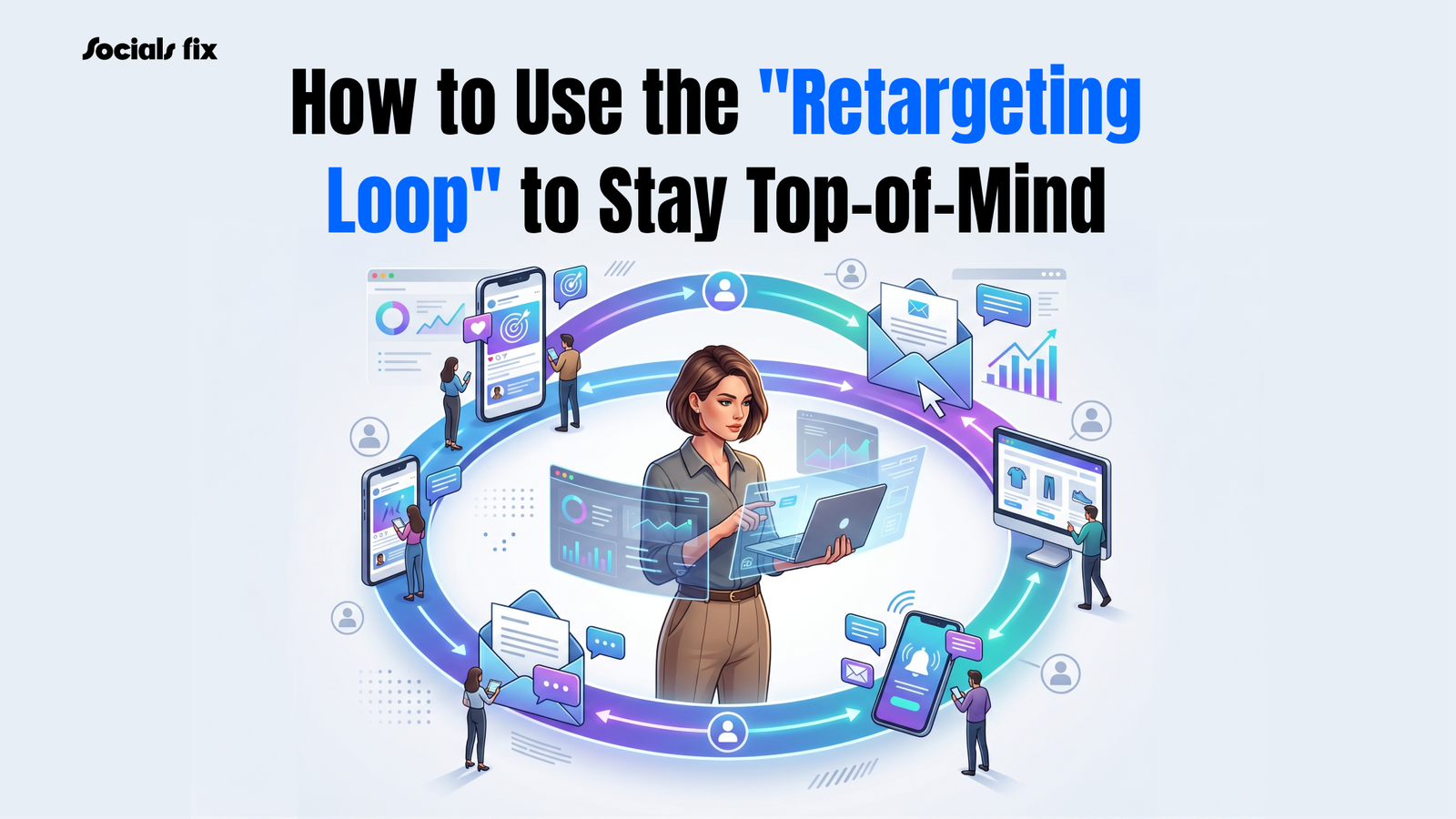
This isn’t a funnel. A funnel implies a straight line. This is a loop – it keeps running, keeps warming new people, keeps converting the ones who are ready.
Here’s how it works in practice.
You publish organic content – Reels, educational videos, opinion posts. People in your target audience observe it. Some of them watch. Some click through to your profile. Some visit your website after seeing your link.
All of that activity – every video view, every website visit, every post engagement – gets captured quietly in the background by Meta’s tracking tools. Without you doing anything manually, Meta builds pools of people sorted by how deeply they are engaged.
Then comes the paid layer. But here’s where most brands get this wrong – they retarget everyone the same way with the same ad. That’s not how it should work.
The person who watched 90% of your video is not the same as the person who bounced off your website in 4 seconds. They need different messages. The 90% viewer already believes you know what you’re talking about – they need proof of results, not more education. The website bouncer might just need a reminder you exist.
Segment by engagement level. Spend the most on the highest-intent groups. The conversion difference is significant.
The Technical Bit (Simplified)
This requires two things to be set up: the Meta Pixel on your website, and the Custom Video Viewer in Meta’s ad platform.
The pixel is a small piece of code on your site that tracks visitor behavior – what pages they viewed, how long they stayed, whether they clicked on your contact form. It feeds this data back to Meta so you can retarget those visitors later.
One honest caveat here: the Pixel alone is less reliable than it used to be. Browser privacy updates and ad blockers mean some website activity doesn’t get captured. The Conversions API – which tracks server-side rather than through the browser – fills those gaps. Running both gives you the most accurate picture. If you’re serious about retargeting, set up both.
For content engagement audiences, no website tracking is needed. Meta builds these directly from activity on the platform – who watched your videos, who interacted with your posts, who visited your Instagram profile. You can create audiences based on:
- People who watched 25% of any of your videos
- People who watched 50%
- People who watched 75% or more
The 75%+ group is where the real intent lives. Save your best, most direct creative for them.
What to Run as Retargeting Ads
This is where most people overcomplicate it.
The organic content does the education work. Retargeting ads aren’t the place to explain who you are or what you do. By this point, they know. What they need is a reason to act.
Case studies work best. Real client, real challenge, real outcome. Specific numbers if you have them. Not “We helped a brand grow its following,” but “A local restaurant went from 400 followers to 6,200 in 11 weeks and started blocking bookings.” Specificity is what makes it credible.
Testimonials in video outperform text quotes. Someone saying it in their own words, in their own way, with real emotion – that’s harder to dismiss than a pull quote on a branded slide.
Before-and-after content for anything with a visible transformation. Engagement rates, follower counts, website traffic, lead volume. Show what changed.
One thing to keep in mind: retargeting ad creative gets stale faster than cold audience creative, because the pool is smaller and the same people see it more often. When frequency climbs above 4-5 impressions per person, performance usually starts to dip. That’s not a failure – it’s just the signal to refresh the creative and run something new.
The Budget Question
Retargeting audiences are almost always smaller than cold audiences. That’s expected – they’re built from people who’ve actually engaged, not a broad demographic bucket.
But smaller doesn’t mean less valuable. The opposite. Most service businesses allocate somewhere between 15-25% of their total ad budget to retargeting and see it do disproportionate work relative to its size.
The warm audience converts at a significantly higher rate. Lower cost-per-lead. Higher return on spend. Less wasted budget on people who don’t know who you are.
One thing to know before you get started: Meta recommends at least 1,000 people in your custom audience before retargeting becomes reliable. If your organic reach is still low, focus there first. The loop becomes more powerful as your audience pool grows – this isn’t a strategy you set up once and expect instant results. Give it time to collect data.
What Actually Goes Wrong
Retargeting too broad an audience. Pulling in everyone who visited the website – including people who bounced in two seconds after clicking the wrong link – inflates the audience with low-quality signals. Tighten it. Use time windows (website visitors in the last 30 days, not 180), and filter by meaningful behaviour.
Same ad on repeat. This one frustrates people. The campaign looks like it’s running, the budget is spending, but nothing is converting. It’s almost always creative fatigue. The warm audience has seen that ad too many times. Refresh it.
No organic content keeping the pool full. Retargeting without consistent organic content is like fishing in a lake you’re not restocking. The warm audience pools drain over time as people move out of the time window. Organic content is what keeps them filling up.
Not reading the frequency metric. Most brands check cost-per-click and stop there. Frequency tells you when creative fatigue is coming before it hits conversions. Watch it.
What to Measure
Skip likes and reach for this one. The metrics that matter for retargeting:
Cost per qualified lead – not just any inquiry, one worth having. Return on ad spend. Conversion rate from warm audiences vs. cold (the gap should be noticeable). Click-through rate by audience segment. And frequency – keep it under 5 for retargeting audiences before refreshing creative.
If your retargeting campaigns are converting like your cold campaigns, something is wrong. Warm audiences should consistently outperform. When they don’t, it’s usually the creative or audience segmentation – not the strategy.
Final Thoughts
Cold ads introduce you. Retargeting converts. Running one without the other leaves money on the table – either you’re reaching strangers who’ve never heard of you, or you’re trying to convert without building a warm audience first.
The loop works because it mirrors how buying decisions actually happen. Someone sees you, notices you, sees you again, sees proof it works, decides to act. That process takes time and multiple touchpoints. Retargeting is how you show up at each one without manually chasing anyone.
Set it up properly. Keep the organic content flowing. Let the audiences build. Then spend against the warmest segment with your best proof.
- Install Meta Pixel and Conversions API before running any paid ads – the data foundation has to exist first
- Build video-view audiences segmented by 25%, 50%, and 75%+ – spend against the 75%+ group
- Use case studies and testimonials in retargeting ads, not brand awareness content
- Monitor frequency and refresh creative before hitting 5 impressions per person
- Keep publishing organic content – it’s what refills the warm audience pools that make retargeting work